
Gearbox for Food Processing
- Typical equipment: Fermentation tank and syrup mixers
- Drive arrangement: efficient coaxial drive layout
- Environment: Washdown, condensation, product dust and restricted maintenance access
Recommended gearbox families

R Series Helical Inline Gearbox
R series inline gearbox-and-motor example

K Series Helical-Bevel Gearbox
K series gearbox-and-motor assembly example

F Series Parallel Shaft Helical Gearbox
F series parallel-shaft gearbox example
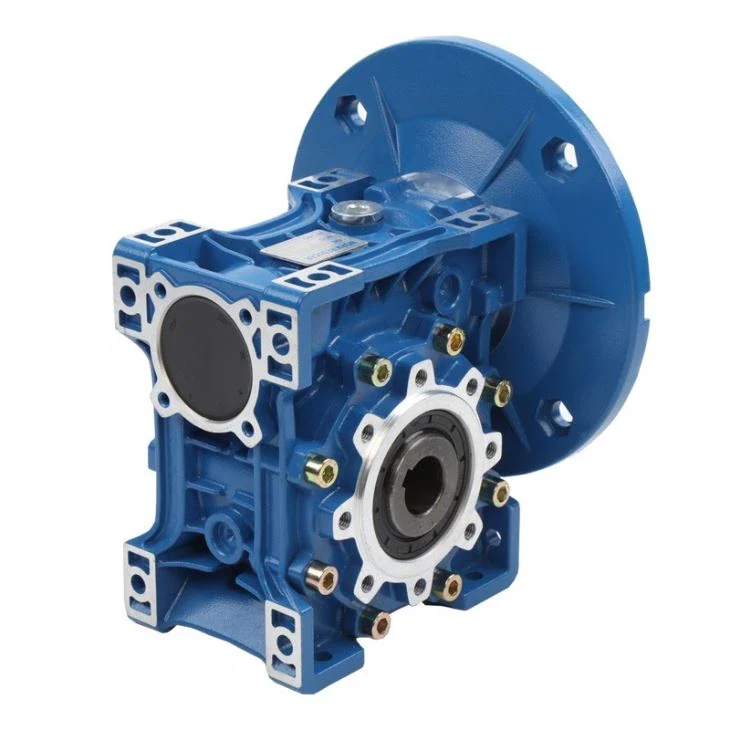
NMRV Aluminium Alloy Worm Gearbox
NMRV worm gearbox example
Selection conditions
An R Series Helical Inline Gearbox is a practical choice for continuous mixers, packaging lines and conveyors when an efficient coaxial drive layout is available. Its conventional arrangement simplifies integration into many light-industry machines.
For vertical fermentation or process-tank mixers, a K Series Helical-Bevel Gearbox should be assessed when a right-angle drive and higher torque are required. An F Series Parallel Shaft Helical Gearbox is relevant to compact conveyors, feed mixers and processing lines where installation length is limited.
A Cycloidal (Pin Gear) Speed Reducer can suit batch mixers or material-handling equipment with repeated shock and high-ratio requirements. The final decision should account for noise, output arrangement, cleaning access and the actual peak torque.
Other layouts to review
An NMRV Aluminium Alloy Worm Gearbox is useful for lighter packaging, conveyor and positioning applications where compact right-angle transmission matters. A WP Series Cast Iron Worm Gearbox may suit selected auxiliary equipment with higher structural demands. Neither worm family should be assumed suitable for uninterrupted high-power operation without a thermal check. An S Series Helical-Worm Gearbox can be considered where a large ratio and right-angle output are needed, subject to the same duty review.
For the layouts discussed above, review R Series inline helical gear units, K Series helical-bevel gear units and F Series parallel-shaft gear units. Confirm washdown, condensation and restricted maintenance access before choosing a configuration.
Light-industry, food and pharmaceutical lines need reliable motion without creating avoidable hygiene or maintenance problems. Fermentation mixers may run continuously, syrup or paste mixers see changing viscosity, and feed blenders cycle through repeated batches. Packaging and transfer equipment usually carries lighter loads but depends on stable speed and minimal downtime.
The gearbox selection must match both the mechanical load and the plant’s cleaning regime. Washdown, condensation, product dust and restricted maintenance access can be as important as torque. A suitable reduction ratio does not by itself confirm that the housing, seals, mounting and lubricant arrangement fit the application.
Why process environment changes the selection
Continuous mixers require thermal stability and predictable lubrication. Batch mixers may experience higher startup torque after material settles, while sugar paste, feed mash and similar products change resistance during processing. If the gearbox is sized only for the motor’s rated power, these changing loads may be missed.
Hygiene creates separate questions. The gearbox may need to sit outside a direct product zone, and the support frame should avoid areas where residue accumulates. Washdown water must not be directed into breathers or seals. Where food-grade lubricants, stainless external components or a specific ingress-protection level are required, those items must be stated in the enquiry and confirmed for the complete drive package.
Typical equipment
- Fermentation tank and syrup mixers
- Feed and powder blenders
- Small conveyors and transfer lines
- Filling, capping and packaging machines
- Dosing and batching equipment
- Process fans and auxiliary drives
- Cleaning and waste-handling equipment
Information needed for this industry
Provide the product or material, viscosity or bulk-density range, batch size and startup condition. Describe dry cleaning, wiping, water washdown or chemical cleaning, and specify food-grade lubricant, material, coating or ingress-protection requirements. State whether the output shaft is vertical. Use the enquiry checklist for standard motor, speed, torque and duty fields.
Open the complete enquiry checklist.
Where mixing, transfer or packaging requires speed adjustment, describe how often it changes and whether the operator or machine controls the change. Review the variable speed drives application guidance alongside these process and cleaning requirements.
Operating and maintenance conditions
Identify the drive position relative to the product zone, cleaning method, planned inspection intervals and acceptable downtime so service access, spare units and replacement interfaces can be reviewed. The client and machine builder remain responsible for hygienic design and compliance of the complete machine; gearbox duty or interface review is not a food-grade certification.
Final configuration requires the applicable technical data and your machine duty.
For installation evidence, use the installation photo guide.
Request an application review
New machine or no nameplate? Contact us.
FAQ
Can a gearbox be described as food-grade by default?
No. Food-grade lubricant, materials, external finishes and ingress protection must be specified for the complete application. No suitability statement should be made without approved evidence.
What matters for a washdown application?
Describe water pressure, cleaning chemical, frequency, drainage and the direction of spray. Breathers, seals and mounting details must be considered before confirming a drive configuration.
Which gearbox types suit packaging lines?
The answer depends on load, speed, layout and duty cycle. NMRV units can fit lighter compact mechanisms, while helical designs may be better for continuous or higher-load transmission.
What should a replacement enquiry contain?
Use the installation photo guide and state the hygiene requirement and expected operating hours. Note whether the former unit failed, needs a different layout or simply needs a dimensional match. Open the installation photo guide.
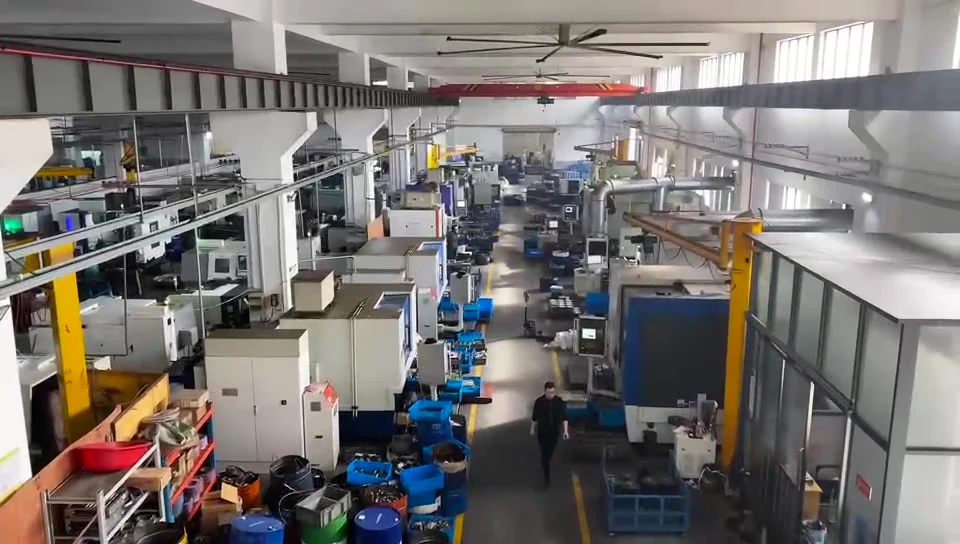
Inside the workshop
A view of the workshop. Product configuration is reviewed against your machine and application.
READY FOR A TECHNICAL REVIEW?
Send your nameplate, get a mounting review within one business day.
Or message us directly