
Gearbox for Wastewater Treatment
- Typical equipment: Aeration and sludge mixers
- Drive arrangement: vertical mixing or a right-angle output
- Environment: humidity, splash and corrosive vapour
Recommended gearbox families

R Series Helical Inline Gearbox
R series inline gearbox-and-motor example

K Series Helical-Bevel Gearbox
K series gearbox-and-motor assembly example

F Series Parallel Shaft Helical Gearbox
F series parallel-shaft gearbox example

Cycloidal (Pin Gear) Speed Reducer
Horizontal cycloidal reducer example
Selection conditions
For scraper bridges, aeration mixers and other continuous drives that need efficient transmission, an R Series Helical Inline Gearbox is a useful baseline when the input and output arrangement can remain coaxial. It supports a straightforward layout and avoids the thermal limitations associated with using a worm gearbox as the default solution.
For vertical mixing or a right-angle output, a K Series Helical-Bevel Gearbox should be evaluated. Its configuration suits applications where the motor must be positioned away from the driven shaft and where higher torque is expected.
An F Series Parallel Shaft Helical Gearbox can fit conveyors, screw presses and sludge-transfer equipment where installation length is limited. For equipment exposed to shock or occasional blockage, a Cycloidal (Pin Gear) Speed Reducer may provide a compact high-ratio option, subject to checking the actual peak torque and mounting arrangement.
Other layouts to review
An S Series Helical-Worm Gearbox can be considered where right-angle transmission and load-holding behaviour are important, but the required safety function must be reviewed separately. A gearbox’s self-locking tendency must never replace a certified brake or other required safety device. WP Series Cast Iron Worm Gearbox and NMRV Aluminium Alloy Worm Gearbox units are better suited to selected auxiliary or lighter duties after thermal capacity is confirmed.
For the layouts discussed above, review R Series inline helical gear units, K Series helical-bevel gear units and F Series parallel-shaft gear units. Confirm maximum sludge load, startup condition and operating hours before choosing a configuration.
Wastewater equipment rarely works in a clean, dry environment. Gearboxes may sit above open tanks, close to chemical dosing lines or beside sludge-handling equipment where humidity, splash and corrosive vapour are normal. Many drives also run slowly for long periods. The visible load may look gentle, but sludge buildup, ragging and sediment can raise the required torque without warning.
A reliable selection must address both mechanical duty and the surrounding environment. Output speed and motor power are only the starting points. Engineers should also define the maximum sludge load, startup condition, operating hours, possible jamming, mounting orientation and the level of water or chemical exposure. These details determine whether the drive needs additional service margin, a different shaft arrangement or stronger protection around seals and surfaces.
Why ordinary selections fail in wet treatment areas
Moisture attacks more than the housing surface. Condensation can enter through breathers, damaged seals or poorly arranged cable and shaft interfaces. Contaminated lubricant loses its protective properties, while corrosion around fasteners and output shafts makes later maintenance difficult. A drive chosen without considering washdown or chemical exposure may remain mechanically sound but still become unreliable because the environment was treated as an afterthought.
The process load can also be deceptive. A sludge scraper may operate at low speed, yet the torque rises when settled material accumulates. Dewatering and compaction equipment can see sudden resistance changes. If the gearbox is sized only for normal running torque, repeated overloads can damage the drive or trigger nuisance shutdowns.
Typical equipment
- Aeration and sludge mixers
- Sludge scrapers and suction scrapers
- Screw presses and dewatering machines
- Sludge transfer and dosing conveyors
- Waste compactors and feeding systems
- Screening and grit-handling equipment
- Tank-mounted agitators
Information needed for this industry
Identify the wastewater equipment, maximum sludge condition, startup and possible jam torque. State whether the drive is indoors, outdoors, covered or close to direct spray, and identify the liquid, cleaning chemical or corrosive vapour that may contact it. Use the enquiry checklist for standard motor, speed, operating-hour and mounting fields.
Open the complete enquiry checklist.
Operating and maintenance conditions
Define washdown and chemical dosing exposure, drainage paths, maintenance access, and seal and lubricant inspection routes. Specify material or coating requirements for exposed components. Record any scraper jam or screw-press blockage so the review uses the actual peak condition rather than ordinary running torque.
Final configuration requires the applicable technical data and your machine duty.
For installation evidence, use the installation photo guide.
Request an application review
New machine or no nameplate? Contact us.
FAQ
What environmental details should be included in an enquiry?
Describe direct spray, humidity, corrosive vapour, cleaning chemicals, outdoor exposure and temperature. These conditions affect protection, seals, coating and maintenance planning as well as the gearbox itself.
Is self-locking enough for a safety function?
No. A gearbox characteristic must never replace a specified brake, backstop or other certified safety measure where reverse movement creates a risk.
What is needed for a sludge-scraper replacement?
Provide the current nameplate, output speed, shaft and mounting arrangement, operating hours and the maximum sludge condition. Photos of the installed drive and bridge arrangement are useful.
Why check maintenance access before ordering?
If breathers, seals or lubricant points cannot be reached after installation, routine inspection is delayed and a small leak or contamination issue can become an unplanned shutdown.
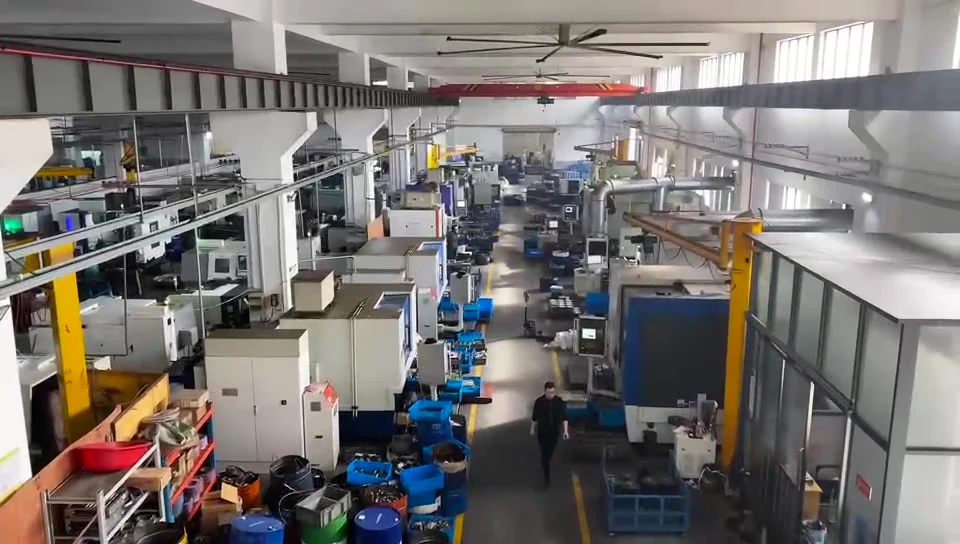
Inside the workshop
A view of the workshop. Product configuration is reviewed against your machine and application.
READY FOR A TECHNICAL REVIEW?
Send your nameplate, get a mounting review within one business day.
Or message us directly