
Gearbox for Agricultural Machinery
- Typical equipment: Straw shredders and crop-residue processors
- Drive arrangement: drive must remain close to the machine frame
- Environment: dust, outdoor temperature swings and irregular loading
Recommended gearbox families

Cycloidal (Pin Gear) Speed Reducer
Horizontal cycloidal reducer example

F Series Parallel Shaft Helical Gearbox
F series parallel-shaft gearbox example

K Series Helical-Bevel Gearbox
K series gearbox-and-motor assembly example

R Series Helical Inline Gearbox
R series inline gearbox-and-motor example
Selection conditions
A Cycloidal (Pin Gear) Speed Reducer is a useful candidate for straw-processing, fertilizer and feeding equipment that needs a compact high ratio and must tolerate repeated load variation. Actual jam torque and shaft arrangement still need to be defined before selection.
An F Series Parallel Shaft Helical Gearbox can fit conveyors, screw feeders and granulation lines where the drive must remain close to the machine frame. For higher-torque right-angle layouts, a K Series Helical-Bevel Gearbox should be evaluated.
An R Series Helical Inline Gearbox suits conventional conveyors, mixers and fans where continuous efficiency and coaxial installation are important. An S Series Helical-Worm Gearbox may support selected gates, lifting devices or positioning mechanisms that benefit from a large ratio and right-angle output. Any safety-related load holding requires a properly specified brake or backstop.
Other layouts to review
WP Series Cast Iron Worm Gearbox units may be appropriate for robust intermittent farm mechanisms, while NMRV Aluminium Alloy Worm Gearbox units can serve lighter conveyors and automation. Worm gearboxes have lower efficiency and greater heat generation than helical alternatives, so they should not be the automatic choice for long high-power shifts.
For the layouts discussed above, review F Series parallel-shaft gear units, K Series helical-bevel gear units and R Series inline helical gear units. Confirm dust, outdoor temperature swings and irregular loading before choosing a configuration.
Agricultural machinery works in conditions that change with the season, crop and operator. Straw shredders, organic-fertilizer granulators and farm conveyors face dust, outdoor temperature swings and irregular loading. Equipment may remain idle for months and then run hard during a short production window, making reliable startup and simple maintenance especially important.
A gearbox for agricultural machinery should be selected from the heaviest realistic duty, not an ideal average. Wet material, foreign objects, blocked feeders and uneven crop density can raise torque suddenly. Mobile equipment also experiences vibration and transport shock that a stationary factory drive may not see.
Why seasonal and outdoor duty is different
Long idle periods can allow moisture to collect and lubricant to drain away from some internal surfaces. At the start of the season, seals may have aged and corrosion may already be present. Once production begins, operators often need long daily running hours with limited time for maintenance.
Dust and fibres can accumulate around the housing, seals and cooling surfaces. A shredder or granulator may also experience repeated shock when material enters unevenly. Selecting only by nominal motor power risks insufficient service margin, while choosing a very large gearbox without checking shaft speed, mounting and inertia can add cost without solving the real failure mode.
Typical equipment
- Straw shredders and crop-residue processors
- Organic-fertilizer granulators
- Feed mixers and dosing equipment
- Screw and belt conveyors
- Bagging and packaging lines
- Grain and material elevators
- Gates, small lifts and positioning mechanisms
Information needed for this industry
Provide machine type, processed material, wet and dry load range, possible jam torque, operating hours during peak season and starts per hour. State whether the unit is stationary or mobile and describe temperature range, rain or wash exposure, dust or fibre buildup and the available maintenance schedule. Use the enquiry checklist for standard motor, speed, torque and installation fields.
Open the complete enquiry checklist.
Operating and maintenance conditions
Define spare-part expectations before the seasonal operating window. State the observed failure or reason for changing the drive and whether an equivalent mounting envelope, a higher overload margin or both are needed. The review must distinguish dimensional replacement from correction of the application.
Final configuration requires the applicable technical data and your machine duty.
For installation evidence, use the installation photo guide.
Request an application review
New machine or no nameplate? Contact us.
FAQ
Can a gearbox be selected from motor power alone?
No. Motor power does not show fibre wrapping, material jams, loaded starts or the seasonal operating pattern. Confirm output speed, peak torque, duty cycle and mounting dimensions before selection.
What should be photographed for a replacement enquiry?
Use the installation photo guide, with a photograph of the machine and failed part to show the actual failure context. Open the installation photo guide.
Is a worm gearbox suitable for a long harvesting shift?
It can be suitable only after checking thermal capacity and real load. For continuous high-power work, a helical or helical-bevel layout may provide a better efficiency margin.
Should spare parts be ordered with the gearbox?
That depends on the machine’s seasonal criticality and local service access. Discuss seals, bearings and a replacement-drive plan before the peak operating window rather than after a field failure.
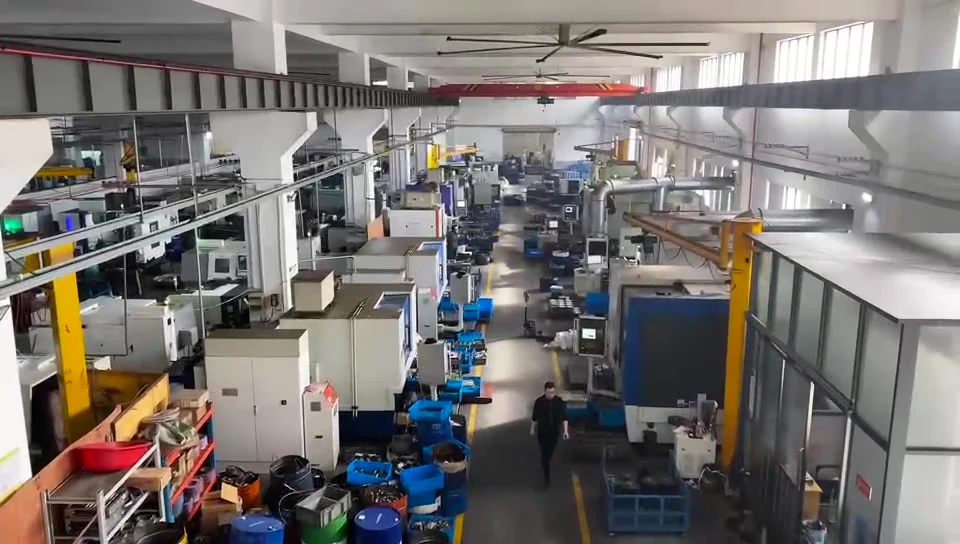
Inside the workshop
A view of the workshop. Product configuration is reviewed against your machine and application.
READY FOR A TECHNICAL REVIEW?
Send your nameplate, get a mounting review within one business day.
Or message us directly