

Horizontal cycloidal reducers
The horizontal cycloidal reducer route is used when the machine arrangement calls for a horizontal drive relationship and the base, shaft connection and access around the assembly must be considered together.
- horizontal drive relationship
- base, shaft connection and access around the assembly
- the motor and reducer can be reviewed as one drive assembly
Output torque by frame size and ratio
Single-stage output torque (N·m); i columns identify catalogue ratios.
The actual mounting surfaces and available clearance must be reviewed before quotation.
Output torque is derived from catalogue input power and ratio. Confirm the figure for your duty before ordering.
| frame_no | i11 | i17 | i23 | i29 | i35 | i43 | i59 | i71 | i87 |
|---|---|---|---|---|---|---|---|---|---|
| 12 | 46 | 71 | 70 | 88 | 72 | 88 | 82 | ||
| 15 | 134 | 141 | 191 | 177 | 213 | 179 | 180 | 146 | |
| 18 | 244 | 377 | 382 | 353 | 291 | 357 | 359 | 295 | |
| 22 | 457 | 706 | 701 | 883 | 775 | 953 | 719 | 865 | 723 |
| 27 | 670 | 1036 | 1401 | 1767 | 1454 | 1310 | 1307 | 1180 | 1446 |
| 33 | 1127 | 1742 | 2357 | 2409 | 2908 | 2620 | 2451 | 2163 | 2650 |
| 39 | 3107 | 4204 | 4458 | 4362 | 3930 | 3677 | 4424 | 3976 | |
| 45 | 5226 | 7071 | 8915 | 8724 | 7860 | 9069 | 8849 | 7951 | |
| 55 | 10510 | 13252 | 13086 | 14291 | 14706 | 12978 | 15902 |
Catalogue mounting forms
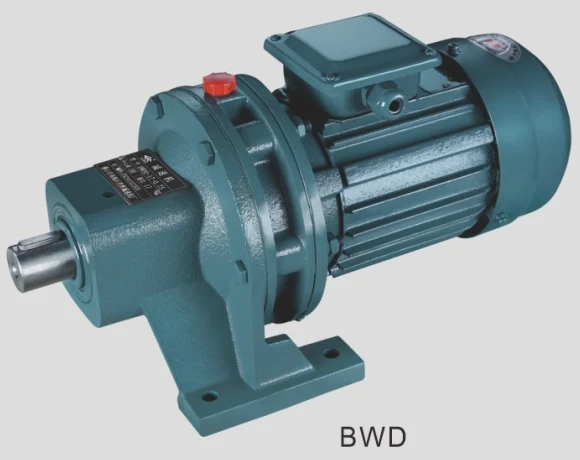
Horizontal cycloidal reducers
horizontal drive relationship
Source: HaoRan catalogue 2026, e-page 6
The horizontal cycloidal reducer route is used when the machine arrangement calls for a horizontal drive relationship and the base, shaft connection and access around the assembly must be considered together. A family name can help begin the conversation, but it cannot prove the mounting dimensions or the operating conditions at the actual machine.
Read the installed arrangement first
Photograph the reducer, mounting base, shaft connection, motor side and surrounding machine space. If an installed drive is being replaced, include the nameplate and the condition that prompted the inquiry. A conveyor, material-handling unit, process machine or other equipment can impose different demands even when the product designation appears similar.
Coordinate the supplied assembly
Where a motor is part of the requirement, the motor and reducer can be reviewed as one drive assembly. The inquiry can then address the mounting interface, equipment context, OEM identification and packing plan in one place. This is more reliable than treating the reducer and motor as unrelated purchases that must be reconciled during installation.
Commercial handoff
MOQ, lead time, packing, delivery routing, warranty expectations and payment terms are agreed for the actual order after the application route is clear. For a destination using rail or land transport, the drive assembly and export documentation remain part of the same commercial review.
Full technical data sheet available on request
Continue with evidence
Send your nameplate with the driven-equipment name, installation images and available mounting space. HaoRan Transmission will identify the family evidence needed before quotation.
Check the base and output relationship
The horizontal installation discussion should establish how the reducer is supported, how the output connects to the driven machine and whether the base or frame has room for the proposed arrangement. Photographs should show the feet or mounting faces, connected coupling or transmission component, nearby guards and any feature that restricts service access. A clear view of the complete assembly is more useful than a close crop of a product name because it shows the relationship between the drive and the equipment it operates.
Describe operating changes, not only failures
An existing horizontal drive may be replaced after a visible failure, but it may also be reviewed because the machine’s material flow, operating cycle, maintenance practice or surrounding environment has changed. Include that history in the request. It helps the technical response identify whether the buyer needs only an interface review or whether the application should be reconsidered before a replacement is released.
Keep site evidence available during the order
The installation images and drawings should remain attached to the inquiry as it moves from technical review to quotation, packing and delivery. For a distributor, this avoids losing the end-user machine context. For an equipment builder, it keeps the approved arrangement linked to the OEM identification and motor requirement. The handoff is clearer when the same evidence informs every stage.
That record also makes later technical questions easier to answer because the original installation context remains visible.
Horizontal or vertical: review the equipment arrangement
| Review point | Horizontal | Vertical |
|---|---|---|
| Mounting orientation | horizontal drive relationshipSource: HORIZONTAL SERIES product guidance — opening paragraph | A vertical arrangement can change access, shaft support, mounting surface, surrounding clearance and service planning.Source: VERTICAL SERIES product guidance — opening paragraph |
| Output orientation | how the output connects to the driven machineSource: HORIZONTAL SERIES product guidance — Check the base and output relationship | above, below or alongside the driven shaft and process equipmentSource: VERTICAL SERIES product guidance — opening paragraph |
| Typical equipment | A conveyor, material-handling unit, process machine or other equipmentSource: HORIZONTAL SERIES product guidance — Read the installed arrangement first | Mixers, vessels, process equipment and other vertical-drive applicationsSource: VERTICAL SERIES product guidance — Match the reducer to the process equipment |
The actual mounting surfaces and available clearance must be reviewed before quotation.
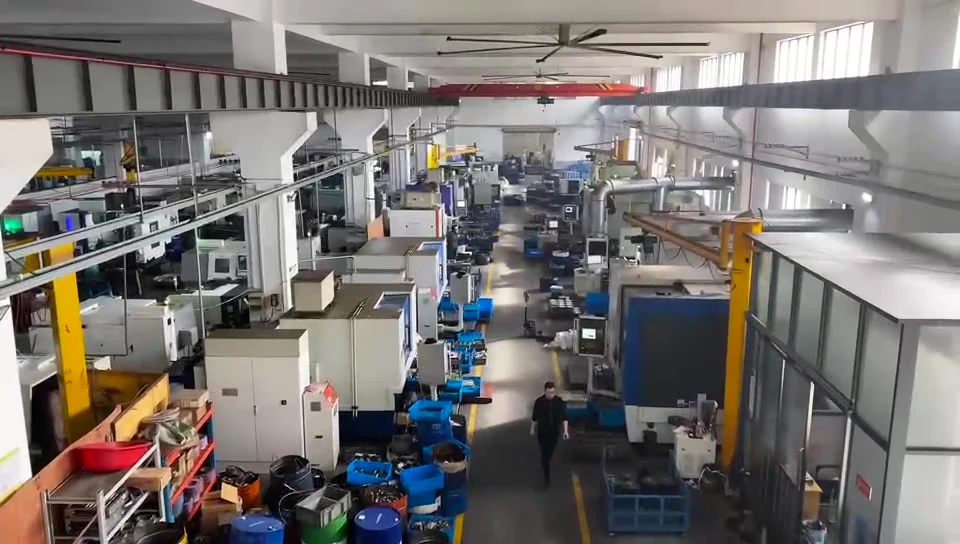
Inside the workshop
A view of the workshop. Product configuration is reviewed against your machine and application.
READY FOR A TECHNICAL REVIEW?
Send your nameplate, get a mounting review within one business day.
Or message us directly