
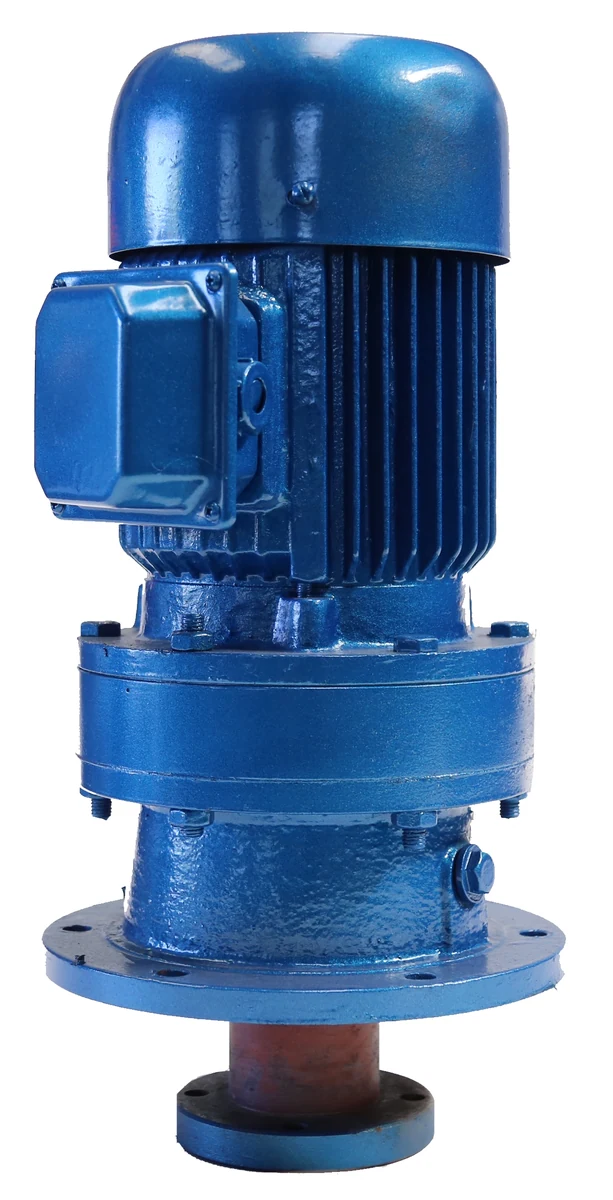
Vertical cycloidal reducers
A vertical arrangement can change access, shaft support, mounting surface, surrounding clearance and service planning.
- above, below or alongside the driven shaft and process equipment
- shaft support, mounting surface, surrounding clearance and service planning
- the motor-and-reducer package can be reviewed as a coordinated requirement
Output torque by frame size and ratio
Single-stage output torque (N·m); i columns identify catalogue ratios.
The actual mounting surfaces and available clearance must be reviewed before quotation.
Output torque is derived from catalogue input power and ratio. Confirm the figure for your duty before ordering.
| frame_no | i11 | i17 | i23 | i29 | i35 | i43 | i59 | i71 | i87 |
|---|---|---|---|---|---|---|---|---|---|
| 12 | 46 | 71 | 70 | 88 | 72 | 88 | 82 | ||
| 15 | 134 | 141 | 191 | 177 | 213 | 179 | 180 | 146 | |
| 18 | 244 | 377 | 382 | 353 | 291 | 357 | 359 | 295 | |
| 22 | 457 | 706 | 701 | 883 | 775 | 953 | 719 | 865 | 723 |
| 27 | 670 | 1036 | 1401 | 1767 | 1454 | 1310 | 1307 | 1180 | 1446 |
| 33 | 1127 | 1742 | 2357 | 2409 | 2908 | 2620 | 2451 | 2163 | 2650 |
| 39 | 3107 | 4204 | 4458 | 4362 | 3930 | 3677 | 4424 | 3976 | |
| 45 | 5226 | 7071 | 8915 | 8724 | 7860 | 9069 | 8849 | 7951 | |
| 55 | 10510 | 13252 | 13086 | 14291 | 14706 | 12978 | 15902 |
Catalogue mounting forms
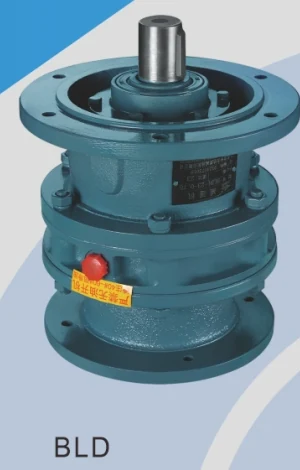
Vertical cycloidal reducers
above, below or alongside the driven shaft and process equipment
Source: HaoRan catalogue 2026, e-page 7
The vertical cycloidal reducer route is discussed around the way a drive sits above, below or alongside the driven shaft and process equipment. A vertical arrangement can change access, shaft support, mounting surface, surrounding clearance and service planning. Those questions need equipment evidence before a product family becomes a quotation-ready selection.
Match the reducer to the process equipment
Mixers, vessels, process equipment and other vertical-drive applications may look alike while facing very different material, environment and maintenance conditions. Explain what the machine does, how the shaft is supported, where the drive is mounted and how personnel can inspect or maintain the assembly. If the inquiry follows an installed-unit failure, include the operating history and visible condition rather than only the old designation.
Keep the interfaces together
Where the drive includes a motor, the motor-and-reducer package can be reviewed as a coordinated requirement. This supports a clearer conversation about the mounting arrangement, shaft connection, OEM identification and packing. It also gives a buyer one route for supplying the drawings and photographs that determine whether the proposed assembly can work at the equipment.
Procurement preparation
The commercial review covers MOQ, lead time, packing, delivery routing, warranty expectations, payment terms and any OEM requirement for the actual order. Destination and transport choices are discussed with the complete assembly, especially where rail or land transport changes the packing and documentation needs.
Full technical data sheet available on request
Request a vertical-drive review
Use Send your nameplate to provide the machine context, nameplate where available, installation photographs and the space around the drive. The response can identify the next evidence required before quotation.
Look beyond the reducer position
Vertical equipment can make the driven shaft, support structure and surrounding process just as important as the reducer itself. Photographs should show the drive in relation to the vessel, frame or machine top, the shaft-support arrangement, the motor location and the service route. This lets the reviewer see whether the proposed assembly can be mounted and maintained without conflicting with guards, pipework, covers or process access.
Treat process conditions as part of the interface
A vertical mixer or process drive can be affected by the material being handled, exposure around the vessel, cleaning requirements and the way operators access the equipment. These facts do not replace the technical selection data, but they determine which questions must be answered before a family recommendation becomes a quotation. If the existing unit has a history of leakage, vibration, noise or difficult maintenance, add that information to the inquiry record.
Preserve the buyer’s requirements through delivery
When an OEM label, motor package, packing request or destination-specific documentation is needed, include it with the installation evidence from the beginning. The commercial review can then keep the vertical drive arrangement, supplied components and transport plan together. This provides a more controlled handoff than treating the reducer as a standalone component without its equipment context.
Horizontal or vertical: review the equipment arrangement
| Review point | Horizontal | Vertical |
|---|---|---|
| Mounting orientation | horizontal drive relationshipSource: HORIZONTAL SERIES product guidance — opening paragraph | A vertical arrangement can change access, shaft support, mounting surface, surrounding clearance and service planning.Source: VERTICAL SERIES product guidance — opening paragraph |
| Output orientation | how the output connects to the driven machineSource: HORIZONTAL SERIES product guidance — Check the base and output relationship | above, below or alongside the driven shaft and process equipmentSource: VERTICAL SERIES product guidance — opening paragraph |
| Typical equipment | A conveyor, material-handling unit, process machine or other equipmentSource: HORIZONTAL SERIES product guidance — Read the installed arrangement first | Mixers, vessels, process equipment and other vertical-drive applicationsSource: VERTICAL SERIES product guidance — Match the reducer to the process equipment |
The actual mounting surfaces and available clearance must be reviewed before quotation.
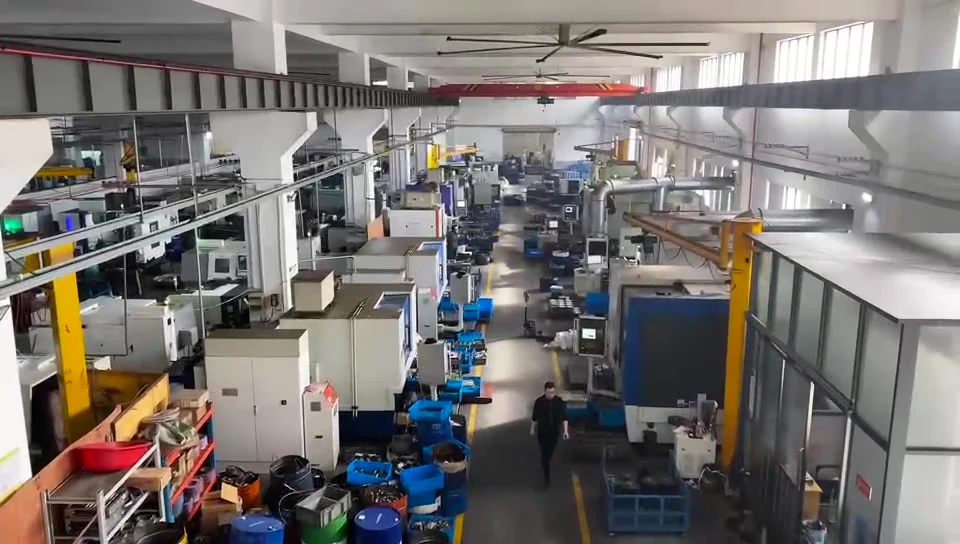
Inside the workshop
A view of the workshop. Product configuration is reviewed against your machine and application.
READY FOR A TECHNICAL REVIEW?
Send your nameplate, get a mounting review within one business day.
Or message us directly