
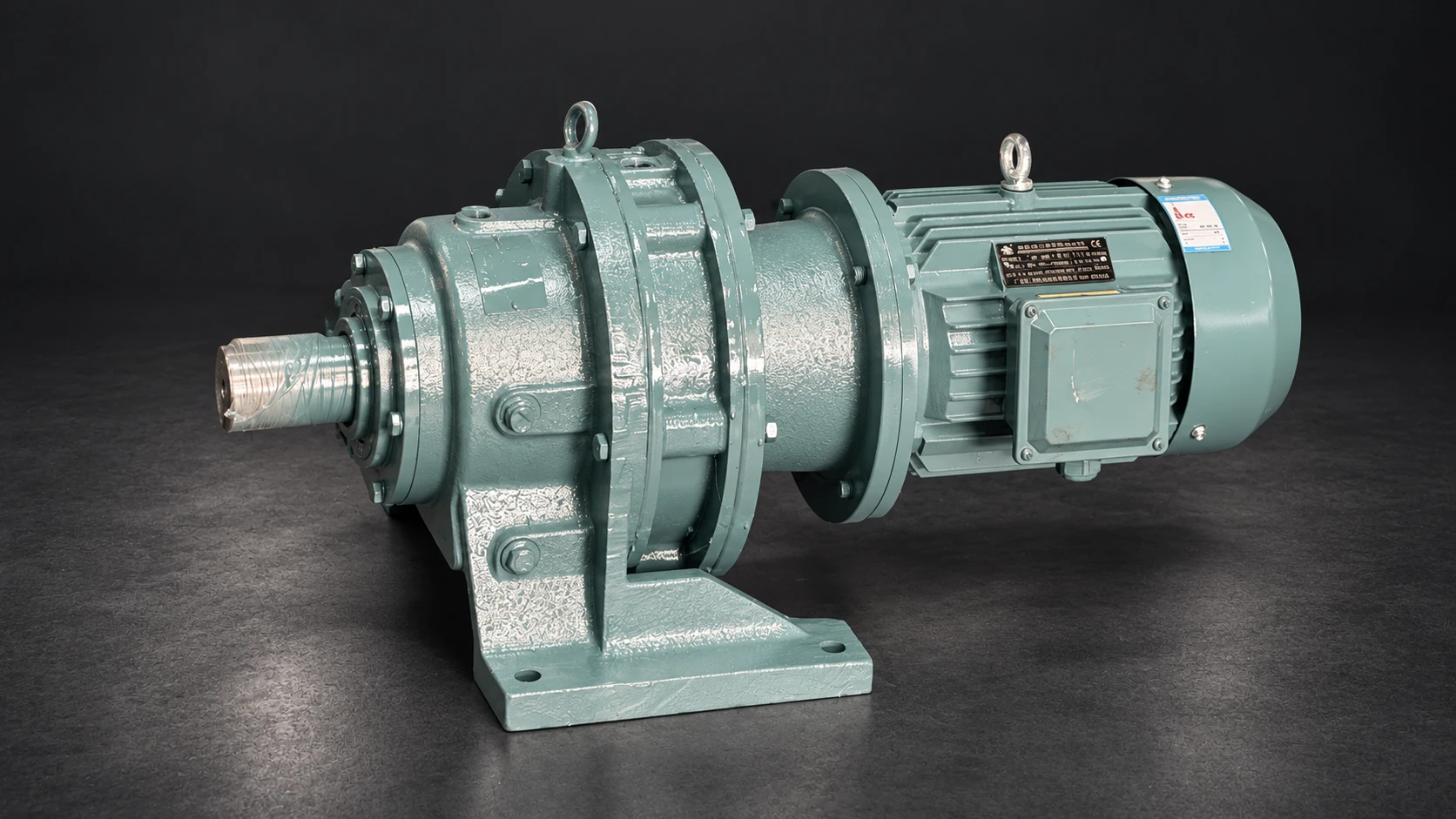
Cycloidal reducers
Cycloidal reducers provide a distinct reduction arrangement for machinery that needs a compact drive layout and an application-led review.
- Horizontal and vertical mounting are selected as separate routes.
- Mounting direction changes how the drive connects to the machine, the motor, the shaft and the space left for maintenance.
- The motor and the reducer are supplied as one assembly.
New machine or no nameplate? Contact us.
Cycloidal reducers provide a distinct reduction arrangement for machinery that needs a compact drive layout and an application-led review. HaoRan Transmission presents horizontal and vertical routes separately because the mounting direction changes how the drive connects to the machine, motor, shaft and maintenance space. The family discussion starts with the equipment and installation, not with an assumed conversion from an old label.
Choose the mounting direction with the equipment
Horizontal cycloidal reducers are discussed around the machine base, shaft arrangement and access around the drive. Vertical cycloidal reducers are discussed around equipment such as mixer or process arrangements where the drive sits in a different relationship to the driven shaft and vessel. The actual mounting surfaces and available clearance must be reviewed before quotation.
Catalogue mounting forms
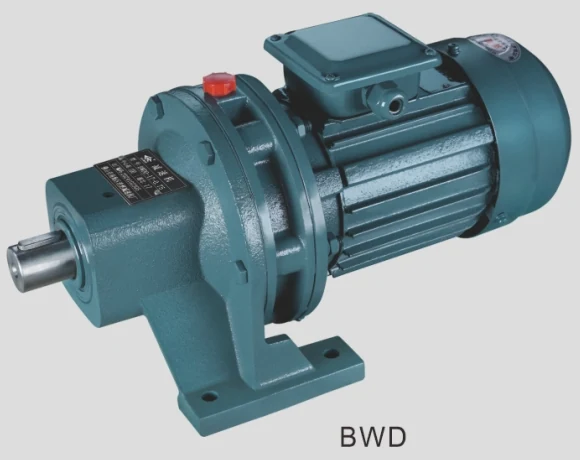
Horizontal cycloidal reducers
horizontal drive relationship
Source: HaoRan catalogue 2026, e-page 6
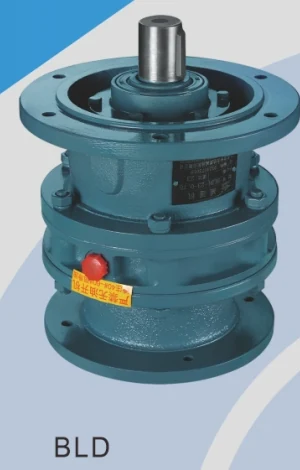
Vertical cycloidal reducers
above, below or alongside the driven shaft and process equipment
Source: HaoRan catalogue 2026, e-page 7
Technical information and selection details
Output torque by frame size and ratio
Output torque by frame size and ratio
Single-stage output torque (N·m); i columns identify catalogue ratios.
The actual mounting surfaces and available clearance must be reviewed before quotation.
Output torque is derived from catalogue input power and ratio. Confirm the figure for your duty before ordering.
| frame_no | i11 | i17 | i23 | i29 | i35 | i43 | i59 | i71 | i87 |
|---|---|---|---|---|---|---|---|---|---|
| 12 | 46 | 71 | 70 | 88 | 72 | 88 | 82 | ||
| 15 | 134 | 141 | 191 | 177 | 213 | 179 | 180 | 146 | |
| 18 | 244 | 377 | 382 | 353 | 291 | 357 | 359 | 295 | |
| 22 | 457 | 706 | 701 | 883 | 775 | 953 | 719 | 865 | 723 |
| 27 | 670 | 1036 | 1401 | 1767 | 1454 | 1310 | 1307 | 1180 | 1446 |
| 33 | 1127 | 1742 | 2357 | 2409 | 2908 | 2620 | 2451 | 2163 | 2650 |
| 39 | 3107 | 4204 | 4458 | 4362 | 3930 | 3677 | 4424 | 3976 | |
| 45 | 5226 | 7071 | 8915 | 8724 | 7860 | 9069 | 8849 | 7951 | |
| 55 | 10510 | 13252 | 13086 | 14291 | 14706 | 12978 | 15902 |
Application context changes the question
Application context changes the question
Conveying, mixing, material handling, process equipment and agricultural machinery can all place a reducer in very different operating conditions. Start with the driven-equipment name, installation orientation, surrounding environment, maintenance access and any event that led to the replacement inquiry. A failed installed unit may point to an interface issue, but it may also reveal a load, lubrication, contamination or process condition that needs separate attention.
Coordinated drive supply
Coordinated drive supply
If the project requires a motor, HaoRan Transmission can discuss the motor and reducer as one assembly. That keeps the motor interface, mounting arrangement, OEM requirement and packing plan in the same technical conversation. It also gives distributors and equipment builders a clear route for sending end-user evidence without reducing the request to an unsupported product name.
Full technical data sheet available on request
Request a review
Request a review
Send an installed nameplate where available, photographs of the complete drive and driven machine, and the available mounting space through Send your nameplate. The review will identify the relevant family route and the missing evidence needed before technical selection.
Separate the equipment route from the catalogue label
Separate the equipment route from the catalogue label
Cycloidal reducer inquiries often arrive with a short historical designation and little evidence about the machine. That can be enough to start a conversation, but it cannot identify the mounting direction, shaft relationship, motor interface or service accessibility. The category is therefore divided by horizontal and vertical installation context. The buyer should choose the starting route that resembles the machine arrangement, then provide the photographs and notes that show whether the route is actually appropriate.
Enquiries reach us as cycloidal reducer, cycloidal gear reducer, cycloidal gearbox, cycloid drive or cycloidal drive. They describe the same reduction arrangement, so any of them is a fine way to start; what the review still needs is the mounting direction and the shaft relationship.
Give the review a maintenance context
Give the review a maintenance context
Ask how the drive will be inspected, lubricated, protected from the surrounding process and accessed if the assembly needs attention. A reducer placed near a vessel, conveyor frame or material-handling point may face a different practical maintenance route even when the reduction principle is the same. These conditions can change which installation details are relevant to the quotation conversation.
Export and OEM preparation
Export and OEM preparation
If the order needs OEM identification, coordinated motor supply or special packing records, state this at the start of the review. The technical evidence can then be held with the commercial request, so the final documentation and packing plan describe the same drive assembly that was evaluated for the machine.
Horizontal or vertical: review the equipment arrangement
Horizontal or vertical: review the equipment arrangement
| Review point | Horizontal | Vertical |
|---|---|---|
| Mounting orientation | horizontal drive relationshipSource: HORIZONTAL SERIES product guidance — opening paragraph | A vertical arrangement can change access, shaft support, mounting surface, surrounding clearance and service planning.Source: VERTICAL SERIES product guidance — opening paragraph |
| Output orientation | how the output connects to the driven machineSource: HORIZONTAL SERIES product guidance — Check the base and output relationship | above, below or alongside the driven shaft and process equipmentSource: VERTICAL SERIES product guidance — opening paragraph |
| Typical equipment | A conveyor, material-handling unit, process machine or other equipmentSource: HORIZONTAL SERIES product guidance — Read the installed arrangement first | Mixers, vessels, process equipment and other vertical-drive applicationsSource: VERTICAL SERIES product guidance — Match the reducer to the process equipment |
The actual mounting surfaces and available clearance must be reviewed before quotation.
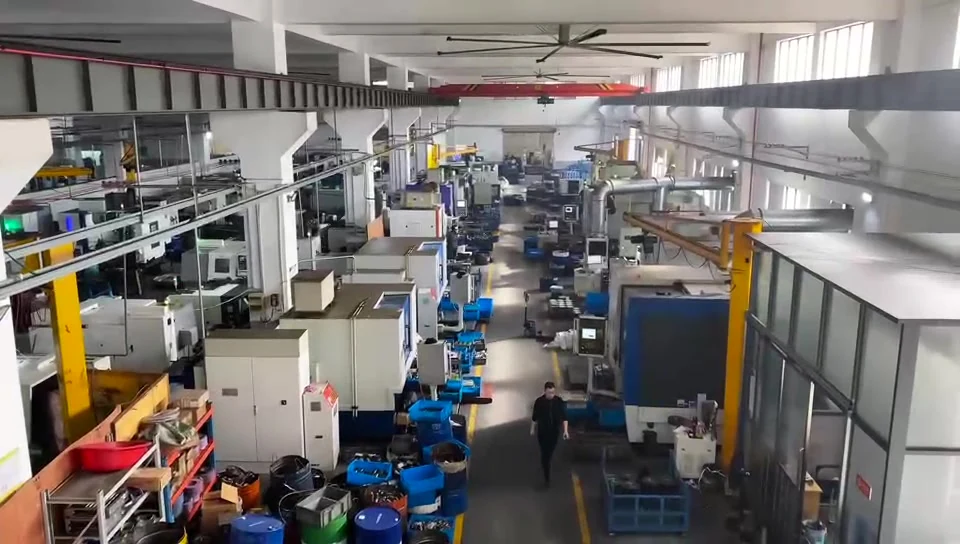
Inside the workshop
A view of the workshop. Product configuration is reviewed against your machine and application.
READY FOR A TECHNICAL REVIEW?
Send your nameplate, get a mounting review within one business day.
Or message us directly