
Gearboxes generate heat during normal operation, but a temperature rise that is new, increasing, or paired with noise, smell, vibration, oil loss, or reduced output needs investigation. Heat is usually a symptom rather than a standalone fault. It may come from excessive load, unsuitable duty, poor lubrication, incorrect mounting, restricted cooling, bearing distress, internal gear damage, or an environmental condition the original selection did not account for.
For maintenance engineers and equipment supervisors, the goal is to determine whether the drive can remain in controlled service, needs a planned correction, or must be stopped before component damage escalates. This article does not set a universal safe temperature because limits depend on gearbox design, lubricant, duty, installation, and manufacturer instructions. Follow the original equipment documentation and site safety requirements.
Recognize the difference between normal warmth and a developing fault
Start with trend rather than touch. A gearbox that has always operated at a stable condition may be acceptable even if its casing feels warm. A gearbox that becomes hotter than its own prior baseline, heats rapidly, or changes behaviour under the same process load needs attention. Use approved monitoring methods and record the location of the observation, operating condition, load state, ambient condition, and any accompanying symptoms.
Never use an unguarded hand near rotating shafts, couplings, belts, or hot surfaces to judge temperature. Do not remove a breather, plug, cover, or guard while the unit is operating. If oil is smoking, the housing is too hot for safe proximity, there is a burning smell, or the condition is paired with severe noise or vibration, stop the equipment under the site procedure and obtain qualified support.
Common causes, beginning with the conditions most often overlooked
The gearbox is working outside the actual duty assumed at selection
Continuous heavy loading, frequent starts, reversing, shock loads, material buildup, or a jammed driven machine can create more heat than the installed gearbox can dissipate. A gearbox may appear correctly sized from motor data while still being unsuitable for the process cycle, inertia, load variation, or mounting arrangement. A change in production rate or material can expose this mismatch without any modification to the gearbox itself.
Review what the machine is actually doing. Ask whether loading, start frequency, direction changes, run time, process resistance, or the consequences of a blockage changed when the overheating began. For conveyors, mixers, pumps, fans, and lifting equipment, a driven-machine problem can be the initiating cause.
Restricted airflow or an unsuitable surrounding environment
Heat must leave the gearbox housing. Dust accumulation, a tight enclosure, poor ventilation, nearby radiant heat, direct sunlight, contamination on cooling surfaces, or a changed installation position can limit dissipation. In washdown or dusty areas, cleaning and guarding choices may inadvertently prevent cooling or block breathers. Inspect the area around the gearbox as well as the gearbox itself.
Incorrect lubricant condition, level, or specification
Low lubricant level can increase friction and damage components. Excess lubricant can churn and foam, creating heat and pressure. Incorrect viscosity, incompatible oil, aged lubricant, water ingress, or solid contamination can all reduce the lubricant’s protective function. The oil-level method and required lubricant depend on the manufacturer’s instructions and the installed orientation; guessing from a sight point or adding oil after a hot run can be misleading.
Look for leakage, foaming, unusual colour, water contamination, metallic debris, or blocked breathers. Record the findings rather than treating every condition with a drain and refill. If the gearbox has internal damage, new lubricant alone will not restore correct operation.
Misalignment, bearing distress, or damaged gears
Misalignment and excessive shaft load create friction in bearings, seals, and gears. Coupling issues, incorrect belt tension, foundation movement, or driven-equipment distortion can transfer load into the reducer. Bearing damage and gear-surface distress also generate heat, often together with noise or vibration. A heat problem that began after motor, coupling, or mounting work should be investigated as an installation issue before internal parts are replaced.
Mounting orientation or accessory arrangement is unsuitable
The internal lubrication path, breather location, and oil-level points can depend on mounting position. A gearbox installed in a different orientation from its intended configuration may not lubricate or vent as designed. Optional cooling, lubrication, or monitoring arrangements must also match the duty. Do not relocate plugs, breathers, or accessories based on visual convenience without the approved configuration information.
A controlled diagnostic approach
First decide whether the condition requires an immediate stop. Stop and escalate when the gearbox produces smoke, emits a burning smell, loses power, makes severe new noise, vibrates abnormally, leaks significantly, has a damaged guard or mount, or drives equipment where unexpected movement can injure people or damage the process. Use lockout and isolation before inspecting guards, couplings, breather points, or mounting hardware.
For a planned inspection, compare current operating observations with reliable maintenance records. Review the process duty, motor and driven equipment changes, lubrication history, installation orientation, ventilation, foundation condition, and nearby heat sources. Inspect external cleanliness, mounting, coupling condition, oil traces, breather condition, and signs of shaft movement. Keep the machine area clean and do not introduce dust or moisture into open ports.
If trained personnel and the site procedure permit condition monitoring, use it to compare locations and operating conditions consistently. The purpose is to identify a trend and correlation with load, not to create a universal pass or fail number. Pair temperature information with vibration, lubricant analysis, and operating history when those methods are available.
Correcting the cause instead of masking the heat
Cleaning cooling surfaces, restoring ventilation, correcting an external alignment issue, replacing a damaged coupling element, or correcting a verified lubricant-service error may solve the problem when the internal condition remains sound. Each correction should be followed by a documented observation under the normal process duty.
Do not simply add a fan, change lubricant, or remove guarding to make the gearbox appear cooler. Those actions can conceal overload, violate safety requirements, or introduce a new contamination risk. If the process requires more capability than the installed arrangement can provide, the remedy may be a different gearbox configuration, a changed drive layout, or a correction to the driven machine.
When repair is no longer the prudent choice
Professional inspection, authorized rebuild, or replacement is appropriate when overheating is accompanied by internal noise, vibration, contamination, repeated lubricant breakdown, damaged shafts or housing, recurring overload, or a history of unsuccessful repairs. It is also appropriate when the original application cannot be shown to match the present duty and mounting conditions.
Do not dismantle a hot gearbox or work on a unit with uncertain load restraint. Stop and call qualified personnel if it is used for lifting, an inclined conveyor, a hazardous process, or any application where unintended movement or oil release creates a serious risk.
For the family review, consult NMRV worm gearbox series and S Series helical-worm gear units. Confirm the installed model and application before selecting a replacement.
Send the nameplate and operating context
A clear nameplate photo, installation photo, description of the driven equipment, running pattern, ambient environment, and history of the heat issue gives a replacement review useful context. Send your nameplate to HaoRan Transmission. We can help confirm the model and identify what application information must be checked before choosing a repair or replacement path.
Continue to a family review
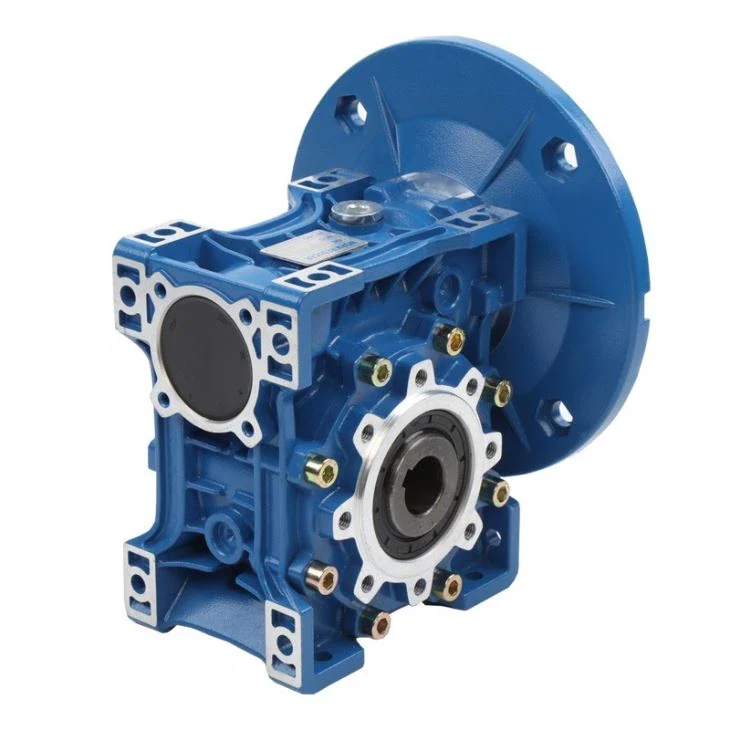
NMRV series
If the existing drive has overheated, leaked, vibrated or failed under a changed duty, describe that context as well.

S series
A worm-stage application needs more than a designation match: the duty cycle, heat conditions, starting load and any back-driving or holding requirement need review with the driven equipment.
READY FOR A TECHNICAL REVIEW?
Send your nameplate, get a mounting review within one business day.
Or message us directly